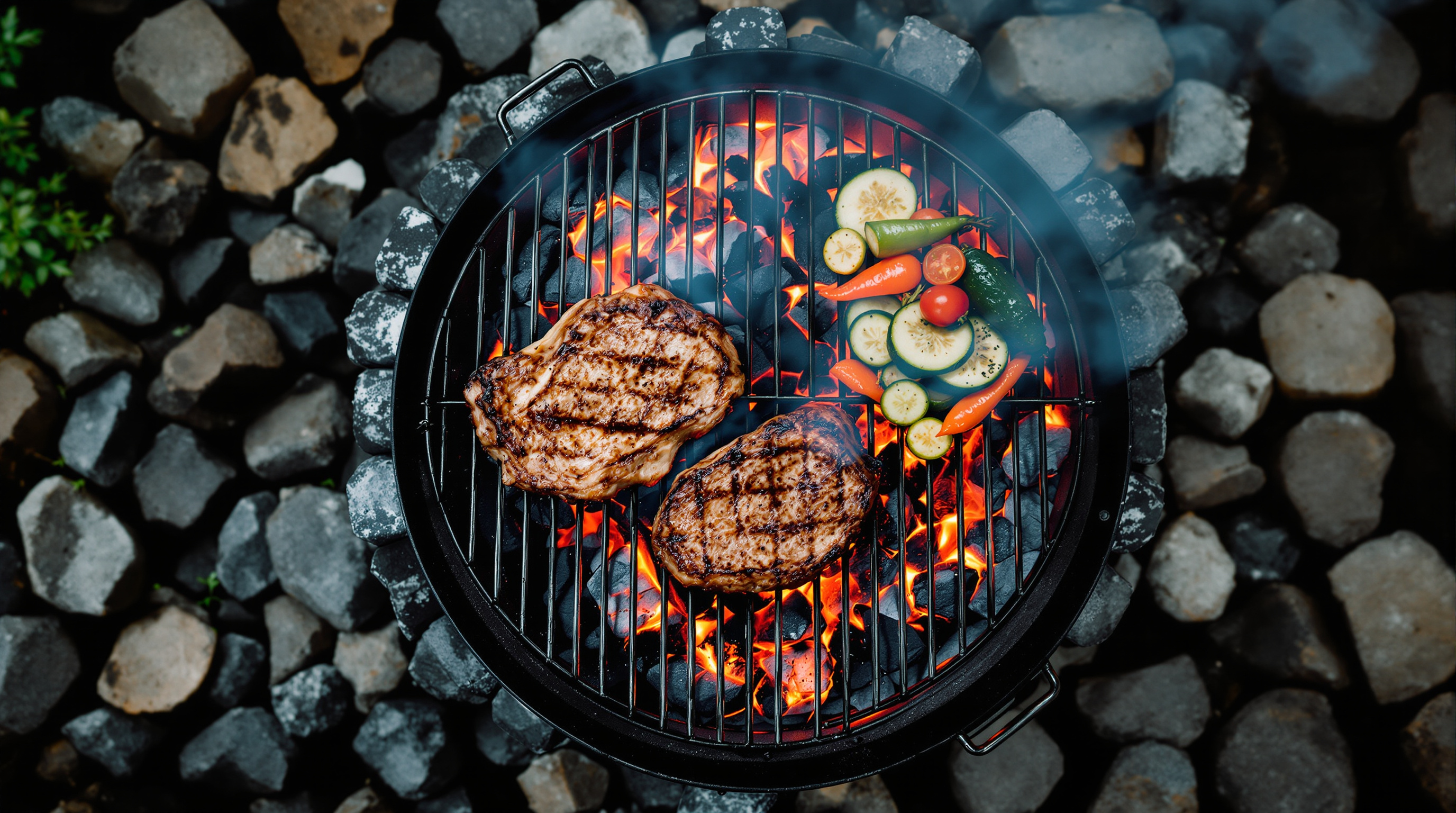
Why crowding the grill fails
A grate covered edge to edge gives you nowhere to go. When fat drips and a flare-up starts, you cannot move the food to safety. When one piece is done and another is raw, you cannot separate them. And with no open grate, you cannot control anything — you can only react. The fix is to give up a third of your cooking surface on purpose.
Divide the fire into three
Whether you burn charcoal or gas, set your grill up with three distinct zones:
- Hot zone (direct high heat): coals banked thick, or burners on high. This is for searing steaks, chops, and anything you want to mark and crust quickly.
- Medium zone (moderate direct heat): a thinner bed of coals, or burners on medium. This is where most food actually cooks through after searing — sausages, chicken pieces, vegetables.
- Safe zone (indirect, no fire below): no coals underneath, or burners off. This is your parking lot. Food that is flaring, cooking too fast, or already finished goes here to hold and coast on gentle indirect heat.
With charcoal you create the zones by raking the coals to one side and sloping them from a deep pile to none. With gas you simply set the burners to different levels and leave one off. Either way you now have a range of temperatures under one lid.
How to cook across the zones
The technique writes itself once the zones exist. Sear over the hot zone to build color and flavor. Slide to the medium zone to cook through at a sane pace. When a flare-up erupts, move the food to the safe zone and let the flames die instead of scorching your dinner. As each piece finishes, park it in the safe zone to stay warm while the rest catches up — so everything comes off the grill together, hot and correctly cooked.
Zones on a small grill
Cooks with a 22-inch kettle or a small gas grill often decide the rule of thirds is a luxury for people with more grate. It is the opposite: the less room you have, the more the empty third earns. On a kettle, bank every coal against one side rather than spreading them, and you get a genuine hot zone, a usable medium band where the pile tapers, and a cool half with no fire beneath it at all. On a two-burner gas grill, one burner on and one off gives you the same thing. The trick on small equipment is simply to cook in batches — sear a few pieces, move them to the cool side, sear the next few — instead of trying to fit everything over the fire at once.
A few supporting habits
Keep the lid down more than you think; a covered grill cooks with surrounding heat, not just the flame below. Trim excess hard fat to reduce flare-ups in the first place. Keep a spray bottle of water for stubborn flames and a clean grate so food releases instead of tearing. And use a thermometer for anything thick — a proper handle on your fire is worth far more than any secret rub. For big cuts that live entirely in the indirect zone, see our guides to smoked beef ribs and prime rib.
Master the rule of thirds and grilling stops being a gamble. You will flare less, burn nothing, and serve everything at its best — the quiet mark of a cook who is actually in control of the fire.