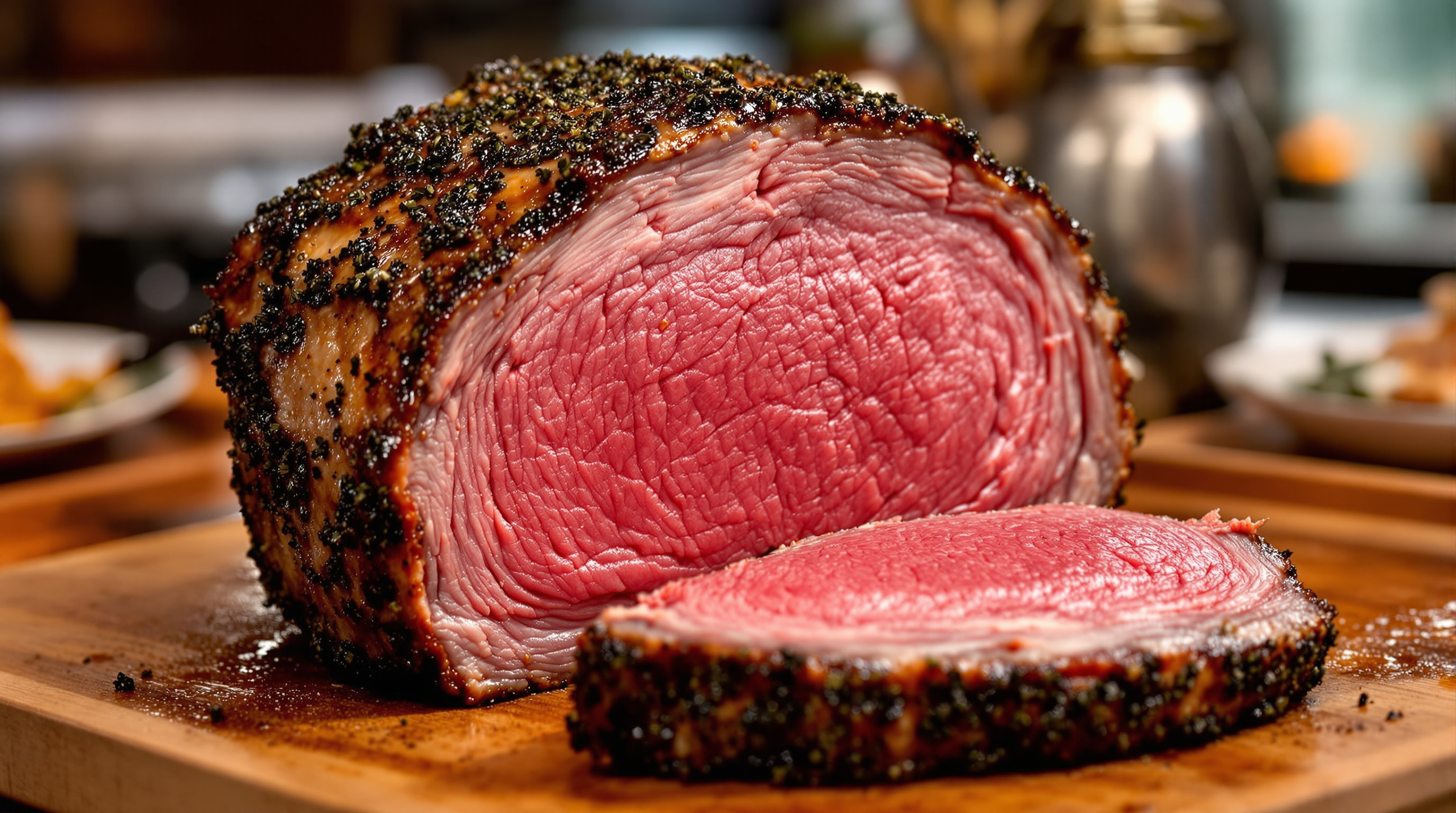
Two roads to a great roast
There are two basic approaches to a standing rib roast, and pitmasters happily argue for both.
Low and slow
Cooked gently in a smoker or low oven at 225–250°F, a prime rib takes its time — often five to six hours for a large roast — and rewards you with edge-to-edge even doneness, deep smoke flavor, and some of the juiciest meat imaginable. Because the oven temperature is barely above the target internal temperature, there is a wide margin for error: the roast creeps up slowly and is hard to overshoot. This is the method to choose if you want a genuine smoke ring and a relaxed afternoon by the pit.
High heat
Cranked to 450–500°F, the same roast can be done in well under an hour. A hot oven sears the exterior hard, building a savory brown crust and driving the cook fast. A twelve-pound roast can reach a rosy medium-rare in less than sixty minutes this way. The trade-off is a wider band of overcooked meat near the surface and far less margin for error — minutes matter at that temperature.
Cook to temperature, not to the clock
Here is the rule that resolves all the conflicting numbers: a roast is done when it reaches the right internal temperature, no matter how long that takes. Times are only estimates because roasts differ in weight, shape, bone, and starting temperature. Use a reliable instant-read thermometer and pull the roast at these internal temperatures, remembering that it will climb another 5–10°F while it rests:
- Rare: pull at about 115°F
- Medium-rare: pull at about 125°F
- Medium: pull at about 135°F
Always follow current food-safety guidance for whole cuts of beef; the USDA publishes safe minimum internal temperatures worth knowing.
Before the clock starts: choosing the roast
Half the outcome is settled at the counter. A bone-in roast cooks a little slower and more gently, since the bones shield the meat and add flavour; a boneless one is faster and far easier to carve. Ask for the roast tied, which keeps it in an even cylinder so it cooks at one rate rather than three. Then salt it generously and leave it uncovered in the refrigerator overnight — a dry brine seasons deeper than a last-minute rub and dries the surface so it browns instead of steaming. Finally, take the roast’s weight and shape seriously when you estimate: a long thin roast and a short thick one of identical weight will not finish within an hour of each other.
The reverse sear: best of both
Many pitmasters now combine the two methods. Smoke or roast the prime rib low until it is about 10–15 degrees short of your target, rest it, then blast the outside at high heat (in a screaming oven or over hot coals) for a few minutes to build crust. You get the even interior of low-and-slow and the browned exterior of high heat — the best of both roads.
Don't skip the rest
However you cook it, let a prime rib rest, loosely tented, for 15 to 30 minutes before carving. Resting lets the juices redistribute so they end up on your plate instead of your cutting board. Slice against the grain, serve, and take the compliments. For more on managing your fire during the cook, see the rule of thirds.