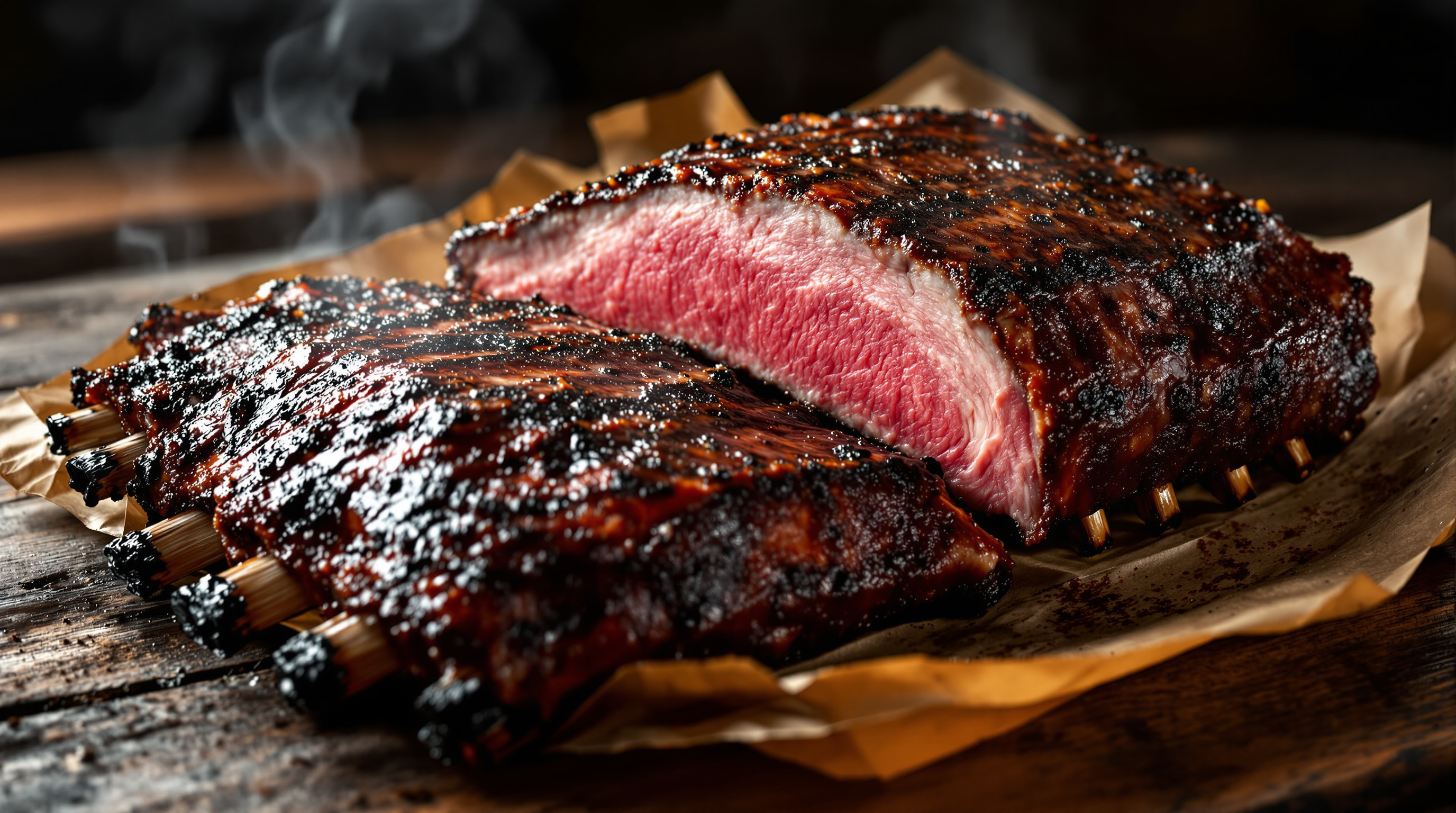
Know your cut
"Beef ribs" covers a few very different things, so start by knowing what is on your counter:
- Plate short ribs (the "dino" ribs): cut from the lower rib area, these are the massive, meat-on-top ribs that go viral. Rich, fatty, and spectacular when smoked whole.
- Chuck short ribs: from farther up the animal, meaty and a little leaner, often sold in slabs of three or four bones. Excellent value and flavor.
- Back ribs: the bones left after a ribeye roast is removed, with most of the meat between the bones rather than on top. Great to gnaw, less meat overall.
For a showstopper, buy plate short ribs. For weeknight-friendly ribs, chuck ribs are hard to beat.
Trim and season
Beef ribs need very little. Peel the tough membrane off the bone side so smoke and seasoning can penetrate and the ribs are pleasant to eat. Trim only the hardest surface fat, leaving a thin layer to render. Then keep the seasoning simple: coarse salt and coarse black pepper — the classic Texas "dalmatian" rub — is all a good beef rib wants. The beef flavor is the point; do not bury it.
Smoke low, cook to feel
Set your pit for 250–275°F with a clean-burning hardwood like oak or hickory. Lay the ribs meat-side up and let them ride. Expect a long cook — large plate ribs can take six to eight hours — and resist the urge to rush the heat. Spritz with water or a little vinegar once the bark begins to set if you like a moister surface and a deeper smoke ring.
Beef ribs are done by feel and temperature, not the clock. You are looking for an internal temperature around 200–205°F, but the truer test is texture: a probe or toothpick should slide into the meat between the bones with almost no resistance, like pushing into softened butter. At that point the tough collagen has fully rendered and the meat is tender and jiggly. Always confirm your beef reaches a safe internal temperature along the way.
Rest, then feast
Wrap the finished ribs loosely and rest them for at least 30 minutes — an hour is better for big plate ribs. Resting relaxes the meat and redistributes the juices. Then slice between the bones and serve. Good beef ribs need no sauce, though a thin, vinegary one on the side never hurts.
Want the smaller, quicker cousin? Try our barbecue chicken guide, or step up to a whole prime rib. New to fire management? Read the rule of thirds first.