Start with a brine
Chicken is lean and easy to dry out, so a simple brine pays off enormously. Dissolve about a quarter cup of salt per quart of water, submerge the chicken for an hour or two (longer for a whole bird), then rinse and pat completely dry. The brine seasons the meat throughout and helps it hold moisture through the cook. Drying the skin afterward is the secret to getting it crisp instead of rubbery.
Set up two zones and cook indirect
The number-one cause of burnt barbecue chicken is cooking it directly over high heat, where the fat and sugary sauce scorch long before the meat is safe. Instead, use the rule of thirds: build a hot zone and a cooler indirect zone. Cook the chicken mostly over indirect heat at a moderate 300–350°F, turning as needed, so it cooks through gently. Only at the very end do you move it briefly over direct heat to crisp the skin and set the sauce.
Cook to temperature — every time
Chicken is the one meat where you must respect the thermometer, because poultry carries a real food-safety line. Cook all chicken to a safe internal temperature: the USDA sets it at 165°F for poultry, measured in the thickest part of the breast and the joint of the thigh without touching bone. See the official safe minimum internal temperatures chart. Many pitmasters take thighs and legs a little higher, to 175–185°F, because the dark meat becomes more tender as its connective tissue renders — but 165°F is the floor you never go below.
Sauce last, not first
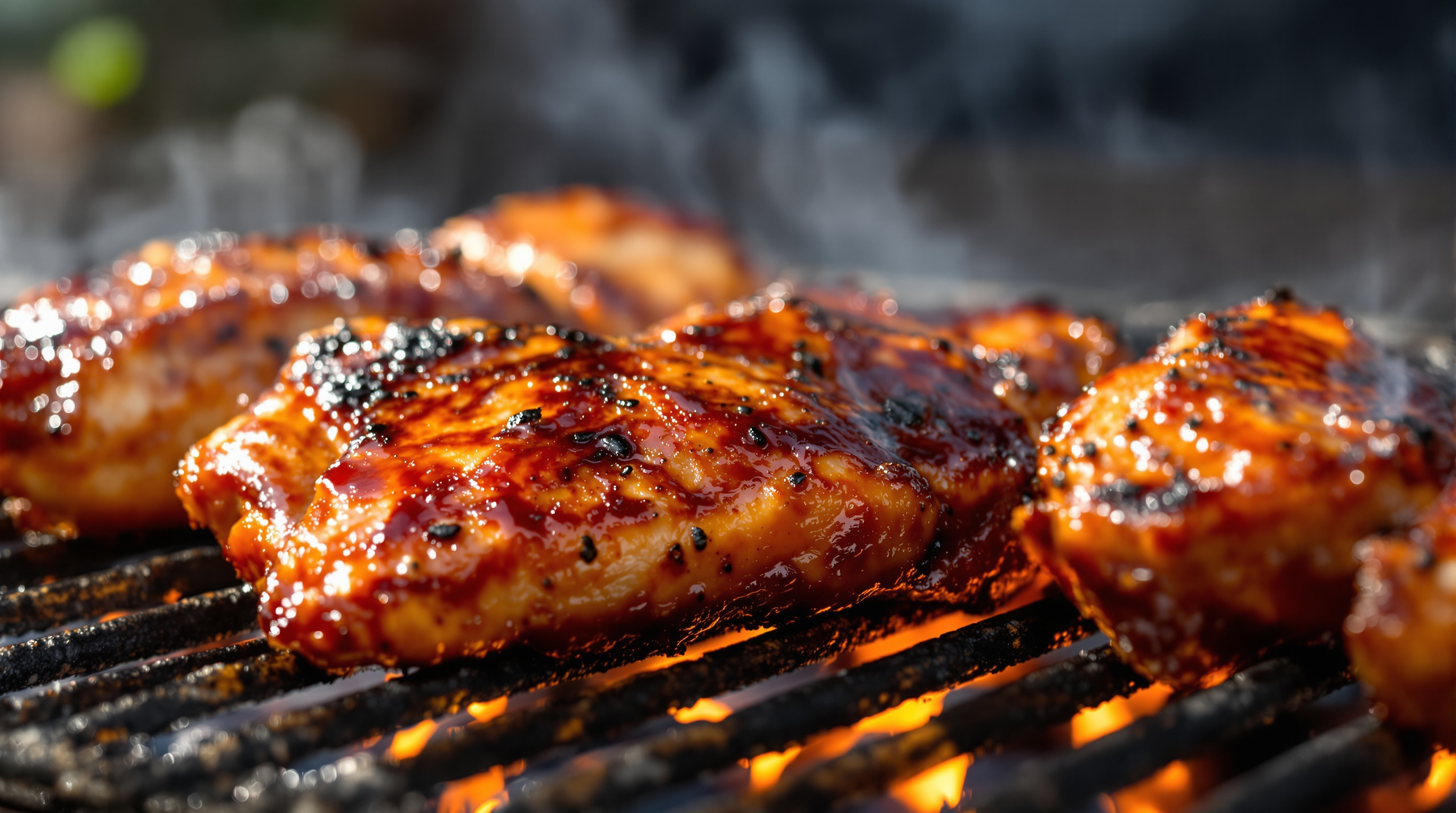
Most barbecue sauce is full of sugar, and sugar burns. If you slather it on early, it will blacken and turn bitter long before the chicken is done. Cook the chicken naked (with just rub) until it is nearly finished, then brush on sauce in a thin coat during the last 10 to 15 minutes, letting each layer set over gentle heat. Two or three thin coats build a glossy, sticky lacquer without a trace of burning.
Chasing bite-through skin
The phrase you will hear from competition cooks is bite-through: skin that yields cleanly to a bite instead of pulling off the meat in one rubbery sheet. Three things get you there. Dry the skin properly — uncovered in the refrigerator for a few hours after brining is better than any towel. Render the fat slowly at moderate indirect heat, because skin that never gets warm enough simply turns to leather. And keep sauce thin and late, since a thick early coat steams the surface you are trying to crisp. If a piece still comes off tough, it almost always means the cook ran too cool for too long rather than too hot.
Whole birds and quarters
The same rules scale up. For a whole chicken, spatchcock it — remove the backbone and press it flat — so it cooks evenly and quickly over indirect heat. For leg quarters, that forgiving dark meat is nearly foolproof and a favorite for feeding a crowd. Whatever the cut, rest the chicken a few minutes off the heat before serving.
Ready for a bigger project? Move on to smoked beef ribs, or read up on the smoke ring you will start to see on your smoked poultry.